Saturday, July 16, 2016

Finishing Model Aircraft Kits With Two Simple Painting Techniques

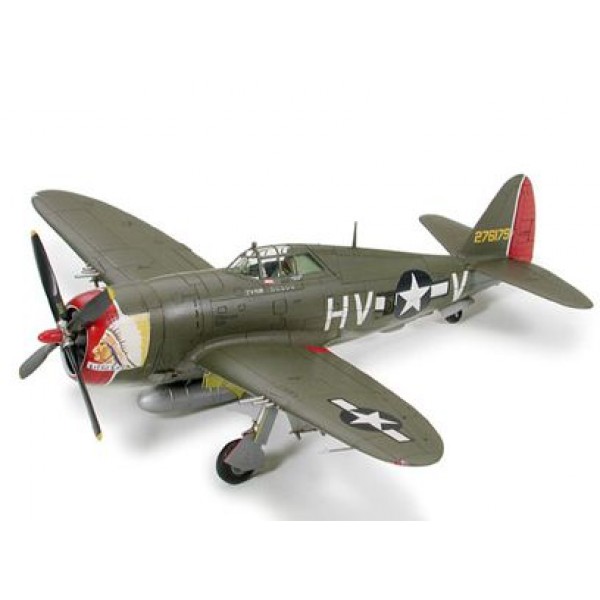
Scale models are intended to portray the original version of a subject, an aircraft, actually. Rarely will you see a real plane without chipped paint, or stains from exhaust or fuel spills. Models can be finished to exhibit the wear and tear of the real thing. The process of making a model look old and used is called weathering. The most common methods of weathering a completed kit are dry brushing and washes, two easy painting techniques.

Both of these techniques are used after the piece or model airplane has been painted and had decals applied. It is also a good idea to consider the paint types used. Use an acrylic or water based paint for weathering. If the finished model aicraft was painted in a water based paint already, make sure it is well cured before weathering. An enamel or solvent based paint used to finish the model kit will not be harmed by using the water based paint in weathering.


Wednesday, June 15, 2016

Building Plastic Model Airplanes Kits - Tips & Thoughts

Building plastic model airplanes kits is a fascinating pastime. Any modeler will tell you that what he builds is absolutely not a toy. The vast majority of models are from history. The accuracy of models is typically what is measured during contests.

Just like any other hobby, there are people at all different levels of experience. However, the type of person that enjoys model building will likely stick with it for years to come. The time, precision and overall dedication to make one model is just part of the puzzle. There is also the relatively high cost of the hobby. Not necessarily the models themselves, but the tools required to do a quality model.

Thursday, March 17, 2016

Model Airplane Kits Basics

Making, collecting and flying model airplanes is a fascinating and addictive hobby, which is attractive to all age groups, and is undertaken by thousands of people each year. It can be very relaxing and you get to enjoy the satisfaction of having built your own aircraft. There are a great range of model airplane kits in the market from a simple build to the more complicated ones. Once yours is built, there are a number of specialist groups and clubs of which you can join to learn more techniques about building the airplane.

All model airplane kits come with step by step fully illustrated instructions and there are different types, according to a person's age, competence and the features required. Some kits are self build and come with all necessary parts, glue and paint. A beginner to this hobby would therefore have to coagulate their thoughts carefully; deciding which kits to buy, their particular interest, and how much time is available to dedicate. It's important to get this right because when it's built, you will find that it is a very satisfying experience.


Friday, February 19, 2016

All You Need To Know About Static Model Aircraft

Static model airplanes, as the name suggest are non-flying models. They are not meant for flying but are mostly built for those whose hobby is to collect and keep these pieces. Static model airplanes are also used as show pieces or placed on strategic places in a room or office to add beauty to the place.

Static model aircraft are made of various materials. These materials include wood, canvas, die cast metal and plastic. Some models may be made with a combination of some of these materials too. For those models that are made from wood, Mahogany and balsa are the commonly used types of wood. These models are normally hand carved and though they are not so detailed to scale, they represent the real planes in many outer details like windows and shape. Plastic materials are more detailed that the wooden models and gives the buyer a wide range of sizes and forms from which to choose. The most detailed models are the ones which are die-cast. These are metallic and are so detailed that they represent the real airplane in exact scale.

Friday, January 15, 2016

Plastic Model Aircraft Modelling Toolkit

The Basic Plastic Model Aircraft Toolkit:


guest post by Tony Garcia

A list of modelling tools that I think are essential for building plastic model aircraft - some of course can be seen as optional but these still have a wide use!:

Friday, January 8, 2016

How to Fill Seams and Sand Model Airplanes

When building model airplanes, it is important to remove the seams and the joint lines. For most assemblies, crack and gaps become common through fitting. The most common issues pertain to the mating lines and wing roots of both sides of the aircraft's fuselage.

Materials you'll need for this project include different grades of sandpaper, a paint brush, sharp hobby knife, a container with some water and a paintbrush. You can also add the Tenax-7R and model putty.

If you'll be utilizing hazardous materials as you build model airplanes, make sure there's plenty of ventilation throughout your working space. Check the labels and warnings on the containers of these chemicals.

Thursday, December 24, 2015

Static Scale Model Aircraft

As the name implies,"static scale model aircraft" are scale models which do not fly, but are pleasant to look at. They are generally the models in travel shops & airlines, museums and collectors. They are made in a number of materials, including plastic, metal, wood and paper. The most common material for kits is injection moulded polystyrene plastic. Injection moulding gives the manufacturers a high level of precision and allows greater automation, which in turn reduces costs. These are now mostly manufactured in the Far East and Eastern Europe. Ready made models (sometimes referred to as desktop models) are sometimes produced in fibreglass, collectors models can made from metal, plastic or specialist wood.

The scales in which these are made vary and are often dictated by various manufactures. The most popular being 1:48 and 1:72, closely followed by 1:32. For civil airliners 1:144 is mostly used (one presumes due to generally being a larger size). The scale size appears to be dictated by the general original size of the real machine, as well as conformity to packaging. (An obvious example would be a scale model of an aircraft carrier, due to its size; it would be impractical to manufacture this in a 1:48 scale.)